SCHOOL TUTORING

English and Maths tutoring built around your child's school.

Year 3 to 10. 1-on-1, online. Every child comes in with a different situation. Some are falling behind. Some want to stay ahead. Some have an assessment coming up and need to break it down with someone. All of that is what we are here for.

Sessions follow what your child's school is actually covering. If there is an assessment due, we work through it together. When there is nothing urgent on, we go back to the fundamentals and build the skills that make everything else easier over time.

Every school runs differently. Different texts, different assessment styles, different pacing. Generic programs do not account for that. We do.

WHY ENGLISH AND MATHS

The two subjects where gaps compound.

Most tutors cover a wide range of subjects. There is merit to that. We focus only on English and Maths, and the reason is specific to how the NSW curriculum is structured.

In senior high school, most subjects can be approached reasonably fresh. A student beginning Year 11 Geography or Science does not need to have mastered those subjects in earlier years. The content is largely self-contained within each stage. English and Maths are different.

Both require knowledge that builds directly on what came before. A student whose Year 7 algebra was shaky will find Year 10 Maths difficult to follow. A student who never learned to structure a written argument in Year 8 will face that same difficulty in Year 11. The gaps from earlier years do not disappear when the next stage begins. They follow the student forward.

That is why we focus on these two subjects specifically. Not because other subjects do not matter, but because these are the ones where early, consistent work makes the biggest difference to where a student ends up.

WHAT WE COVER

Two subjects. Built around your child's stage.

Years 3–6

Primary School

English

Reading Comprehension

At Years 3 and 4, we build the fundamentals: decoding, fluency, and understanding what a comprehension question is actually asking. By Years 5 and 6, sessions shift toward inference and connecting ideas across a text, including preparation for the NAPLAN reading test. We follow your child's own reading level and school text list, not a fixed program.

Writing

Primary writing sessions focus on structure first. Narrative writing in Years 3 and 4 means learning to plan a story before writing it. By Years 5 and 6, we add persuasive and informative writing, matching what NAPLAN and most primary schools now assess. Every session works from what your child's teacher actually wants to see.

Mathematics

Mathematics

Primary maths covers the core foundations, not what a specific school happens to be doing that week. Years 3 and 4 focus on number sense: place value, times tables, and fractions. Years 5 and 6 build on that with decimals, percentages, and early problem solving. These are the building blocks every student needs heading into Year 7, regardless of which primary school they're at.

Years 7–10

High School

English

Reading Comprehension

High school reading moves from understanding a text to analysing it. Year 7 and 8 sessions cover close reading and responding to unfamiliar texts. By Year 9 and 10, we work on comparative analysis and the kind of extended response Stage 6 English will expect. We match the text types your child's school is actually teaching.

Writing

Writing at this stage moves beyond paragraphs into full assessment pieces. We work on persuasive and discursive writing in Year 7 and 8, then build toward the analytical essay structure Year 9 and 10 students need for school assessments and, eventually, the HSC. If there's a specific assessment due, we plan and refine it together, whether it's an essay, a speech, or a monologue.

Mathematics

Mathematics

Maths gets more abstract from Year 7. Topics like algebraic techniques and linear equations come in early high school, then trigonometry, indices, and more advanced problem solving by Year 9 and 10, though every school moves through the syllabus at its own pace, and some follow a more advanced curriculum than others. Sessions follow whatever your child's class is actually covering, with extra focus wherever the specific gap is.

HOW WE WORK

School aligned. Not a set workbook.

Most tutoring programs follow a set curriculum regardless of what a student's school is doing. We do not. Sessions are built around where your child is right now. What their school is covering, what is coming up, and what needs the most attention underneath all of it.

1

We start with an assessment.

Before any session begins, every student sits an initial assessment. This gives us a clear picture of where they are in English and Maths before we decide how to use the sessions. We are not guessing at what they need. We know.

2

We follow the school, not a fixed syllabus.

Tell us what is coming up and we work through it. Assessment on a specific novel? We break down the text, the likely question types, and the marking criteria. Maths test on fractions? We go back to where the gaps actually are rather than covering everything at once. Sessions follow the school's rhythm, not ours.

3

Between assessments, we build the fundamentals.

When there is nothing urgent coming up, that is when the real work happens. We go back to the skills that keep causing problems. The grammar rules that do not stick, the reasoning steps that get skipped, the comprehension habits that cost marks across every task. These are the things a single revision session will not fix but consistent weekly work will.

John 'Bing' Huang · Tutor since 2014.

FROM THE FOUNDER

The fundamentals are what carry a student through every year that follows.

When I was at Penrith High School, two classes in the same year group doing the same English topic could be studying entirely different books. The class next door was not reading what we were reading. This is not unusual. Schools set their own texts, run their own assessments, and move at their own pace, even within the same campus.

What this means is that the underlying skills matter more than any particular program. A student who genuinely understands how to read closely, structure an argument, or work through an unfamiliar Maths problem will handle whatever their school puts in front of them. A student who has only ever followed a worksheet will struggle the moment something unfamiliar appears.

That is what we build. The fundamentals underneath the content, alongside whatever your child's school is actually covering right now. 1-on-1, online, following your child specifically.

WHAT THEY SAY

What families say about sessions.

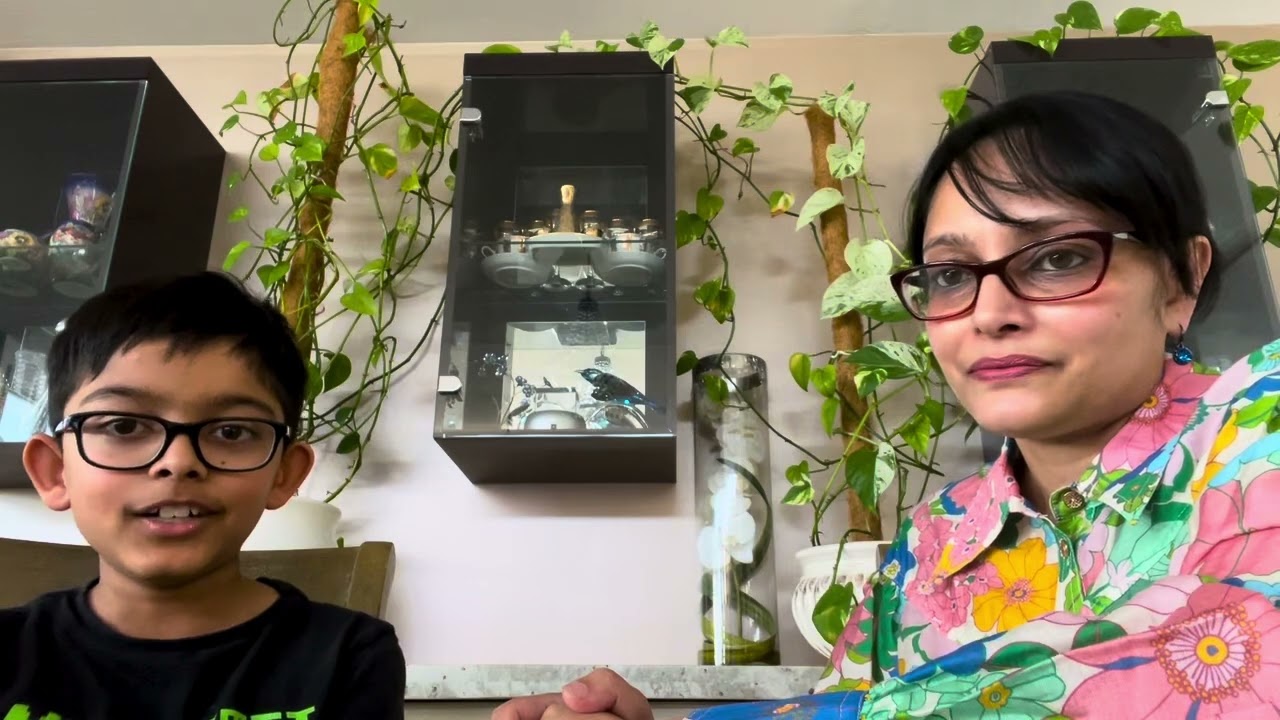
Ishaq and IFA testimonial

The teachers are very friendly and I can see that Ishaq looks forward to his class. I feel that is a key ingredient for a child's learning process.

Ifat, parent of Ishaq

Ishaq received tutoring in English and Maths through Bing's Academy.

Thinking about tutoring for your child?

Get in touch and we will talk through where your child is, what they need most right now, and whether weekly sessions make sense for them. No commitment required.